TOOTH REPLACEMENT:
UNDERSTANDING COST & LONG-TERM VALUE
When you lose a tooth, you really only have two options: a bridge or an implant. Both options restore your smile, but they differ in cost and methods.
A bridge is typically more affordable upfront because it uses the teeth on either side of the space for support, which allows the gap to be filled without surgery.
An implant replaces both the root and the visible portion. That makes the procedure more expensive but creates a solid stand-alone unit that could last for many years if properly cared for.
BRIDGES - TWO MAIN TYPES
Not all bridges are designed the same way.
A TRADITIONAL BRIDGE involves placing crowns over the teeth located on either side of the missing tooth. The crowns will serve as anchors for the replacement tooth placed between them. This option works great if the neighboring teeth require additional protection.
- Pros: Durable and stable for biting purposes, reliable, and long-lasting
- Cons: Requires reshaping of the neighboring teeth, puts added stress on those teeth

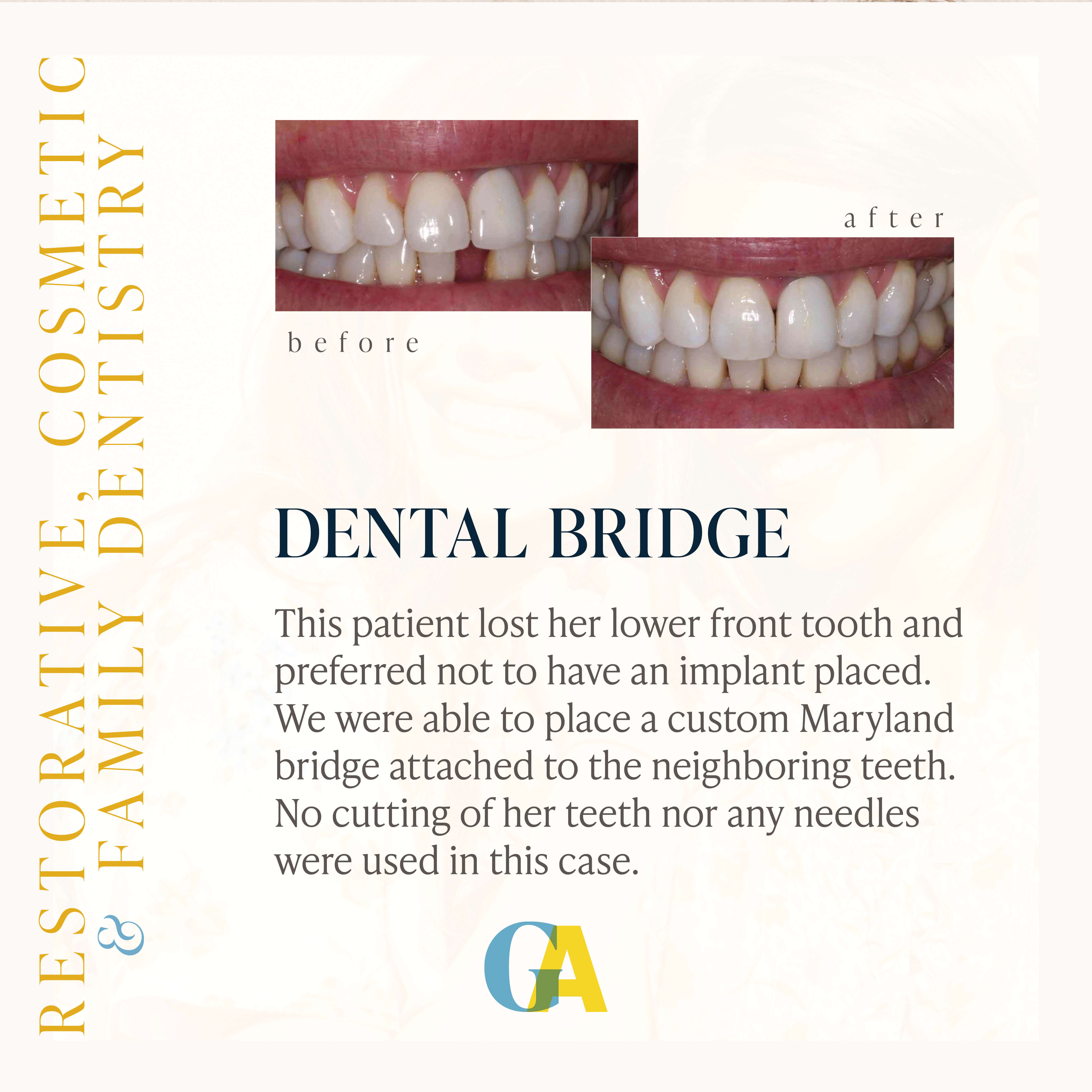
A MARYLAND BRIDGE is a much less invasive approach used in cases where there is no need to reshape the neighboring teeth. A framework made of metal or ceramic will be cemented to the backs of the adjacent teeth. It requires removing less tooth enamel; however, this type of bridge might not withstand heavier biting forces.
- Pros: Preserves natural tooth structure, minimally invasive approach
- Cons: Weaker than traditional bridges, might come loose, suitable only for low-pressure areas like front teeth
THE BEST PATH TO TAKE
Every patient and situation is unique. Dr. Gregson will assess your oral anatomy, function, and goals before deciding on the best solution for you. The ideal solution should mimic your original teeth in structure and durability.
To explore your options for tooth replacement, schedule a consultation with Gregson & Associates today.
Contact us to book your visit
or call (504) 849-0190